I work mainly in four towns on the Marne: Saint-Maur-des-Fossés, including La Varenne, Le Perreux-sur-Marne, Nogent-sur-Marne and Joinville-le-Pont. I also work in Fontenay-sous-Bois, Vincennes, Saint-Mandé, Charenton-le-Pont and Saint-Maurice, in Champigny-sur-Marne case by case, and elsewhere in France on a project basis.
According to France’s national building database (BDNB), in every town below except Champigny-sur-Marne, most houses with a known construction date were built before 1948. The database takes construction years and wall materials from the land register, and years are often rounded: they show a trend, not the exact age of your house.
Protected surroundings are the area around a historic monument where the Architecte des Bâtiments de France (ABF) must agree to exterior works; the monument itself may stand in a neighbouring town.
Saint-Maur-des-Fossés and La Varenne
I am based in La Varenne-Saint-Hilaire. According to the BDNB, Saint-Maur has 12,113 houses, and just over two thirds of those with a known date (68.3%) were built before 1948. Among these older houses, millstone is the most common wall material (38.5%), ahead of brick (32.2%).
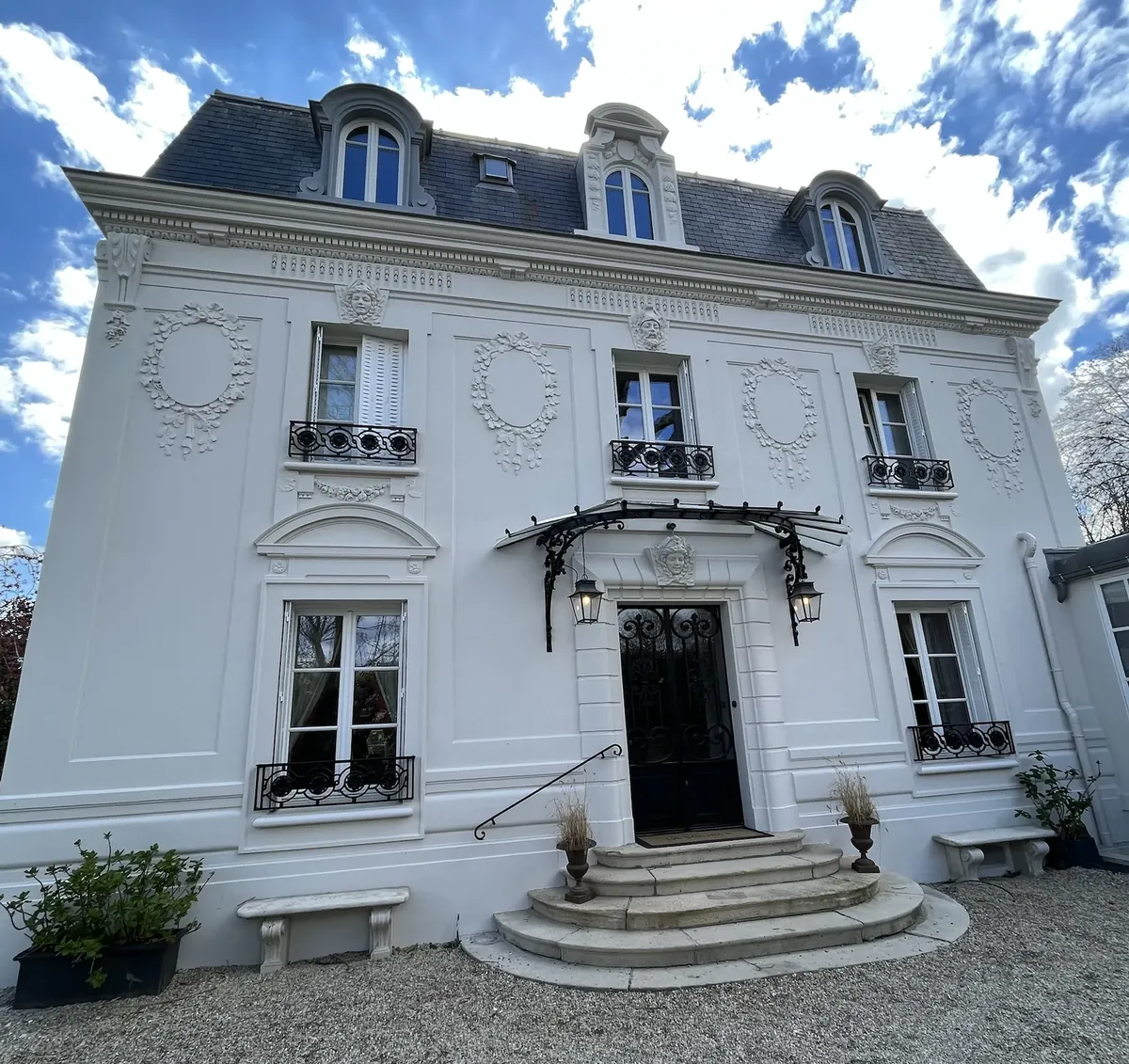
The town’s facade charter cites the large houses and holiday villas of La Varenne, Le Parc Saint-Maur and Champignol as examples of richly decorated facades. Any facade renovation here requires a déclaration préalable, a prior declaration filed with the town hall. More on the Saint-Maur-des-Fossés page (in French).
Le Perreux-sur-Marne
Le Perreux has 4,609 houses, and 71.9% of those with a known date predate 1948. According to the BDNB, 647 of these older houses lie within the protected surroundings of a historic monument, such as the Russian pavilion left from the 1878 World’s Fair. As in Saint-Maur, a facade renovation requires a déclaration préalable. More on the Le Perreux-sur-Marne page (in French).
Nogent-sur-Marne
Nogent has fewer houses (1,989) but a high share of old ones: 79.7% of those with a known date predate 1948. More than half of these older houses (52.1%) have millstone walls, a higher share than in any other town I cover. More on the Nogent-sur-Marne page (in French).
Joinville-le-Pont
Joinville has 1,940 houses. Among those built before 1948, brick comes first (40.5%), ahead of millstone (31.6%), and only 57 lie within the protected surroundings of a monument. More on the Joinville-le-Pont page (in French).
Vincennes and Saint-Mandé
Both towns have few houses, but old ones. Vincennes has 872, and 82.3% of those with a known date predate 1948. In Saint-Mandé, 233 of the 249 houses were built before 1948, and 227 of those lie within the protected surroundings of a monument: there, exterior works go through the ABF almost every time. More on the Vincennes and Saint-Mandé page (in French).
Fontenay-sous-Bois
Fontenay has 4,979 houses. Among those built before 1948, brick is the most common wall material (40.2%), and 894 of these older houses lie within the protected surroundings of the church of Saint-Germain-l’Auxerrois. More on the Fontenay-sous-Bois page (in French).
Charenton-le-Pont, Saint-Maurice and Champigny-sur-Marne
I work regularly in Charenton-le-Pont and Saint-Maurice; in Champigny-sur-Marne, I take on houses case by case. Charenton (188 houses) and Saint-Maurice (222) have few, but most predate 1948: 85.0% and 85.4% of those with a known date. Champigny has many more (8,699), fewer of them old (44.3%), and brick leads among the older ones (46.1%). FRONTIS, the facade company I work with, is based in Champigny. More on the Charenton, Saint-Maurice and Champigny page (in French).
Figures: France’s national building database (BDNB, CSTB), 2026-02.a.