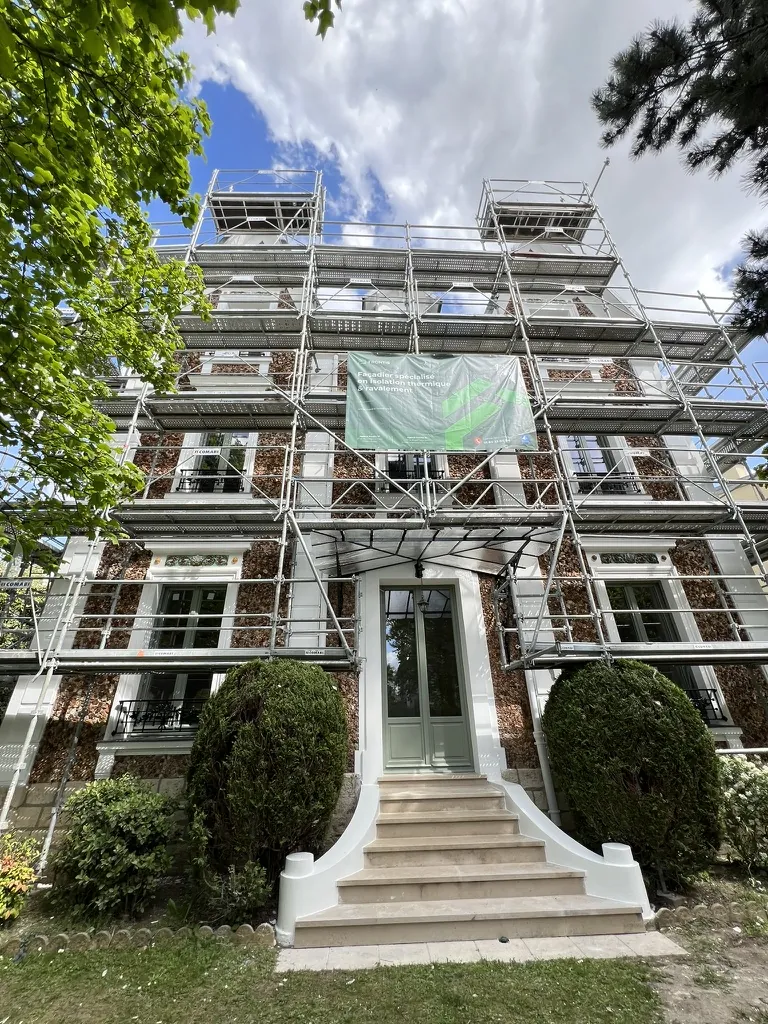
An owner’s representative helps you, the owner, through a renovation: I listen to what you want, read the house, make sure the quote describes the right work, and follow that work until it is handed over. In French, the role is called assistant à maîtrise d’ouvrage (AMO): the person who assists the owner, or maître d’ouvrage.
If you were looking for a renovation project manager, it is worth being precise: my role is a different one. I do not direct the works or manage the company’s teams on site, and I do not take on the company’s responsibilities. The partner company carries out the works under the quote you sign with it, and answers for them; I advise you, help prepare that quote and follow the works with you until handover.
What does an owner’s representative do?
In France, you sign a quote with a company, and the company carries out the works. Between the two, there is a lot to understand: what the house needs, what each line of the quote means, what happens on site and when. My work is to make all of that clear, in English, and to keep the house at the centre of every decision.
How am I paid?
I am paid by the companies that carry out the works. My visit, my reading of the house and my advice are not invoiced to you.
I say it plainly because you should know it from the start. Alongside my work with owners, I act as a technical sales adviser for a small number of partner companies. I recommend them because I know their work. The quote you receive is theirs, detailed line by line: you read it, you ask your questions, and you decide.
The companies I work with
- FRONTIS, for facades: traditional facade renovation, lime renders and limewashes, stone, millstone, brick, mineral paints and external insulation. FRONTIS is a KEIM-approved applicator (KEIM makes mineral silicate paints) and is based in Champigny-sur-Marne (frontis-isolation.fr).
- FRONTIS and Aertoit, for roofs: slate, tile and zinc, and zinc work such as gutters, downpipes and flashings (aertoit.fr).
- Baltazar Berthemet, my trusted partner for finishing work (second œuvre), which comes after the facade and the roof: cabinetmaking, restoring old windows, adding insulating glazing to existing windows, and interior painting. The page on old windows and cabinetmaking (in French) presents this work.
Photos of houses before and after their facade work are on the projects page.
Six steps, from the first visit to handover
1. Listening
Before suggesting anything, I come to see the house and I listen to you: what you like about it, what concerns you, how you live in it and when you would like the work done.
2. Reading the building
I look at what the walls are made of, how they were built and what earlier repairs used: a cement joint on millstone, an acrylic paint on a lime render. For roofs, I use a drone, which gives photos and measurements without climbing up. The thickness of the existing render is established during the technical visit, by probing the wall.
3. Describing the work
With the partner company, I describe the work in a detailed quote: each surface, each material, each method. The colour is chosen from a colour chart and its reference is written into the quote, so that what is agreed is what is applied. For a facade, the page on facade restoration shows what this involves.
4. Working with the right company for each trade
Each trade has its own company. The partner companies carry out the works under the quotes you have signed, each with its own craftsmen: lime, stone and millstone for the facades, slate and zinc for the roof, wood for the joinery.
5. Following the works
I come on site during the works, check that they follow the quote and keep you informed in English. Some pauses are part of the job: lime hardens slowly, and I explain what the material asks for.
6. Handover
At the end, I go round the house with you and the company. You then formally accept the works, the step the French call réception; anything still to be finished or put right is recorded as a reservation in the acceptance report.
Permits, in plain English
Changing the look of a house (colour, materials, external insulation) requires a déclaration préalable, a prior declaration filed with the town hall. In Saint-Maur-des-Fossés and Le Perreux-sur-Marne, any facade renovation needs one. In Saint-Maur, the file includes a location plan, photographs of the house and a description of the materials and colours.
The town then has one month to reply. Near a historic monument it has two, because the Architecte des Bâtiments de France (ABF), the state architect in charge of protected surroundings, must agree to the works and may attach conditions. Those surroundings are either a perimeter drawn around the monument or, where there is none, the area within 500 metres that lies in its field of view.
Near a monument, expect lime systems to be required and cement-resin mortars to be ruled out. I explain what each document asks for, and why. The guide to the déclaration préalable and the ABF (in French) goes into more detail.
In English with you, in French on site
Everything I send you can be in English: my reading of the house, the quote explained line by line, news of the works. With the craftsmen, I speak French. The areas I cover lie mainly around Saint-Maur-des-Fossés, and the page on my role as AMO (in French) covers the same ground for French readers.