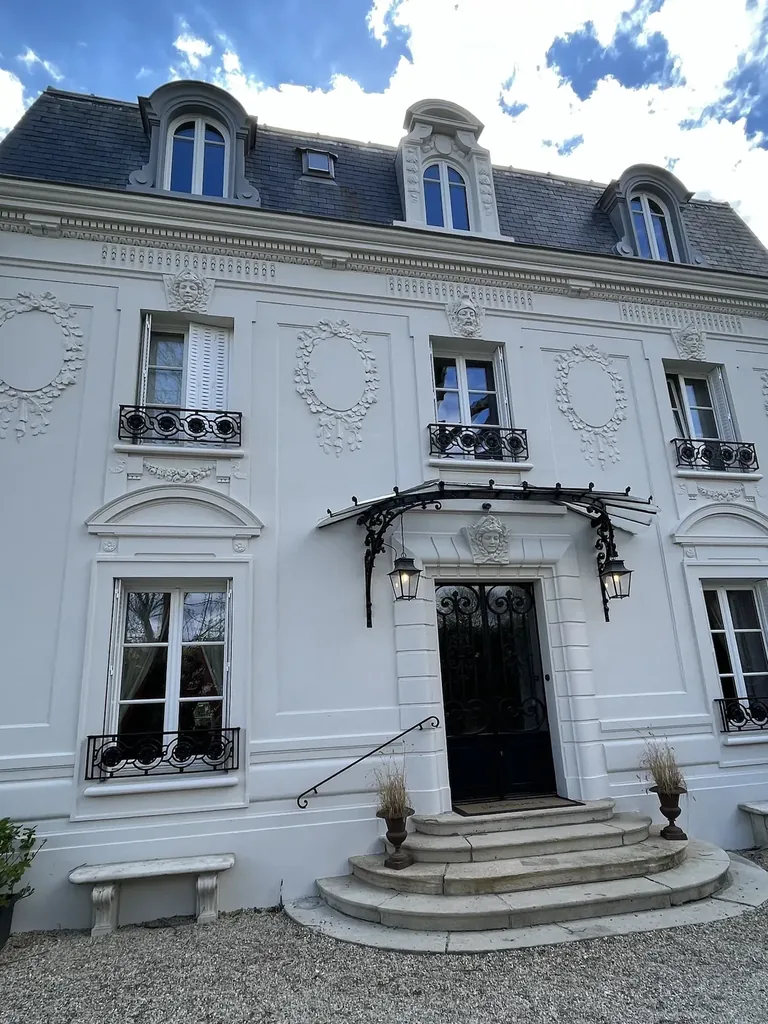
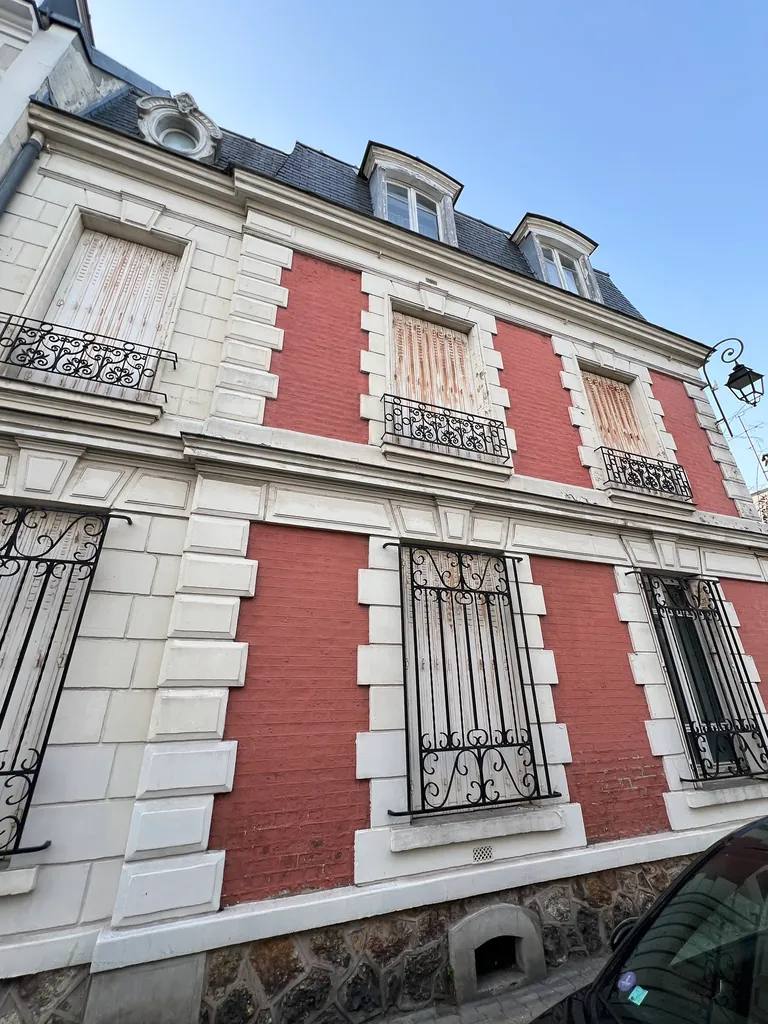
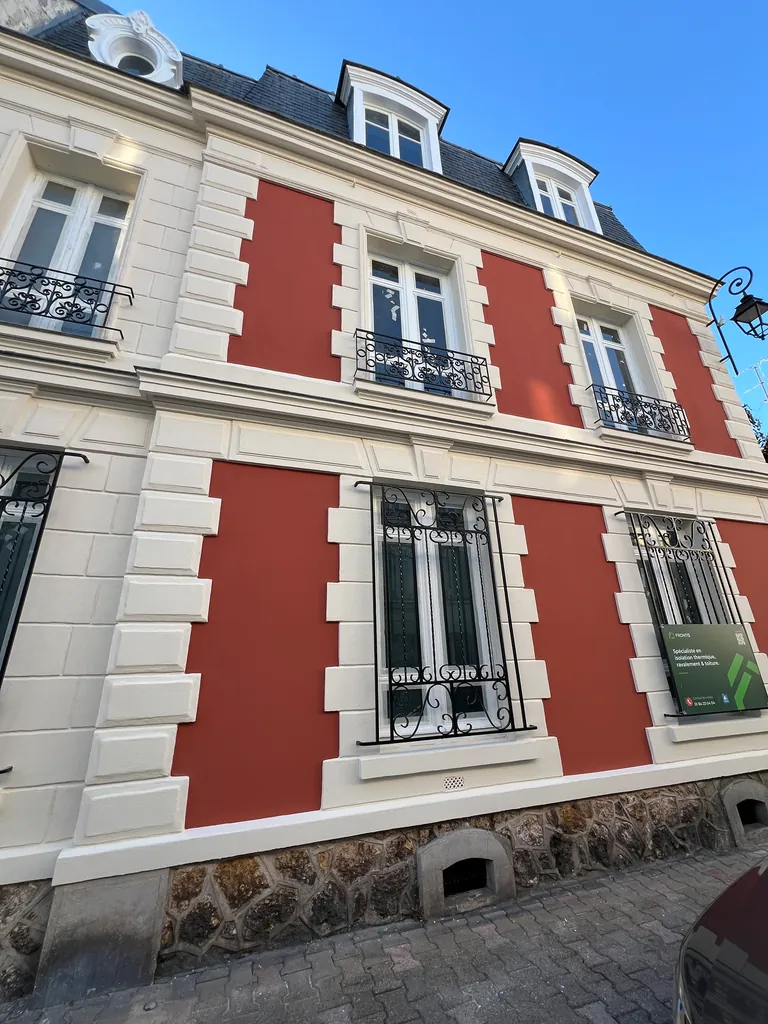
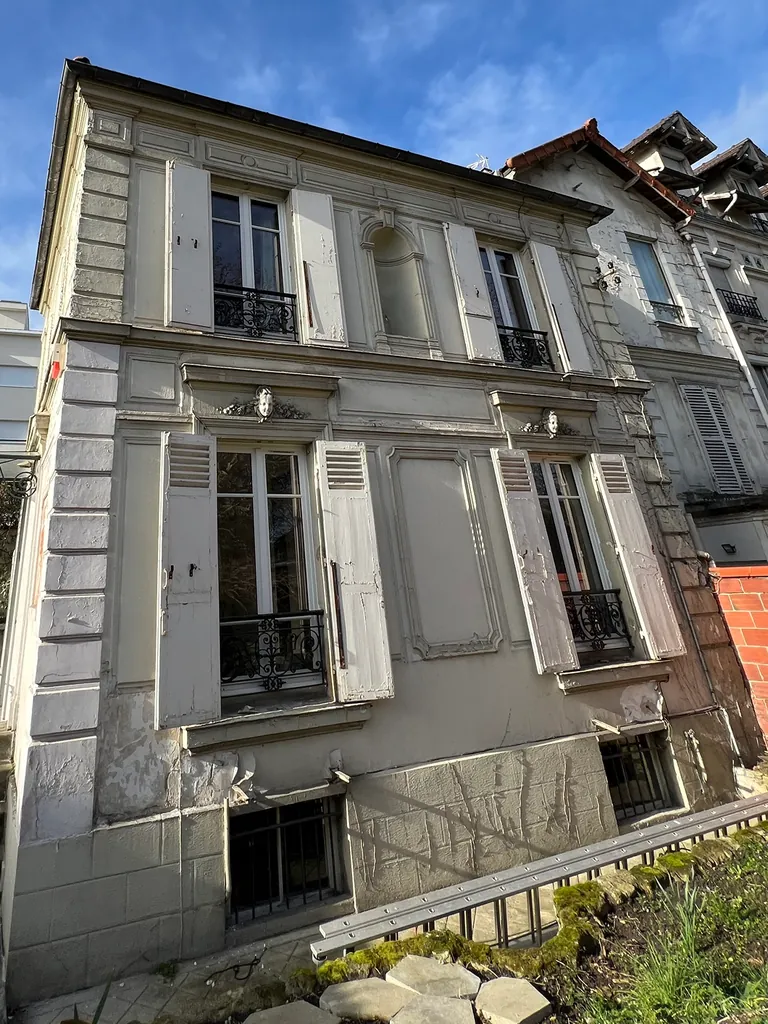
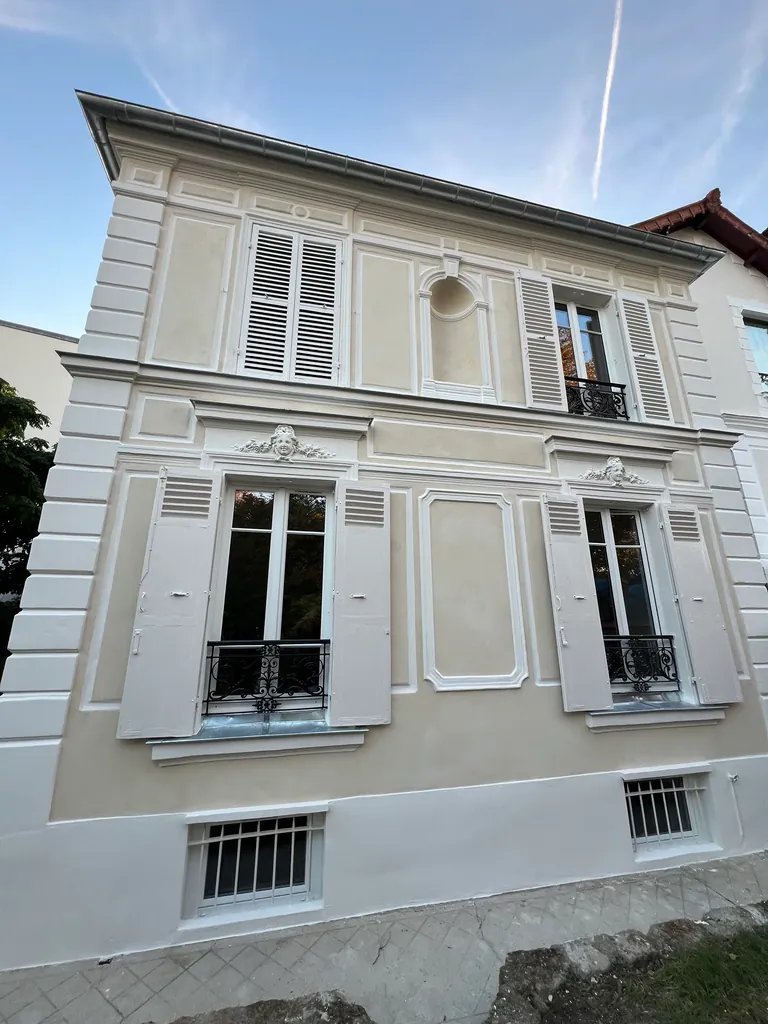
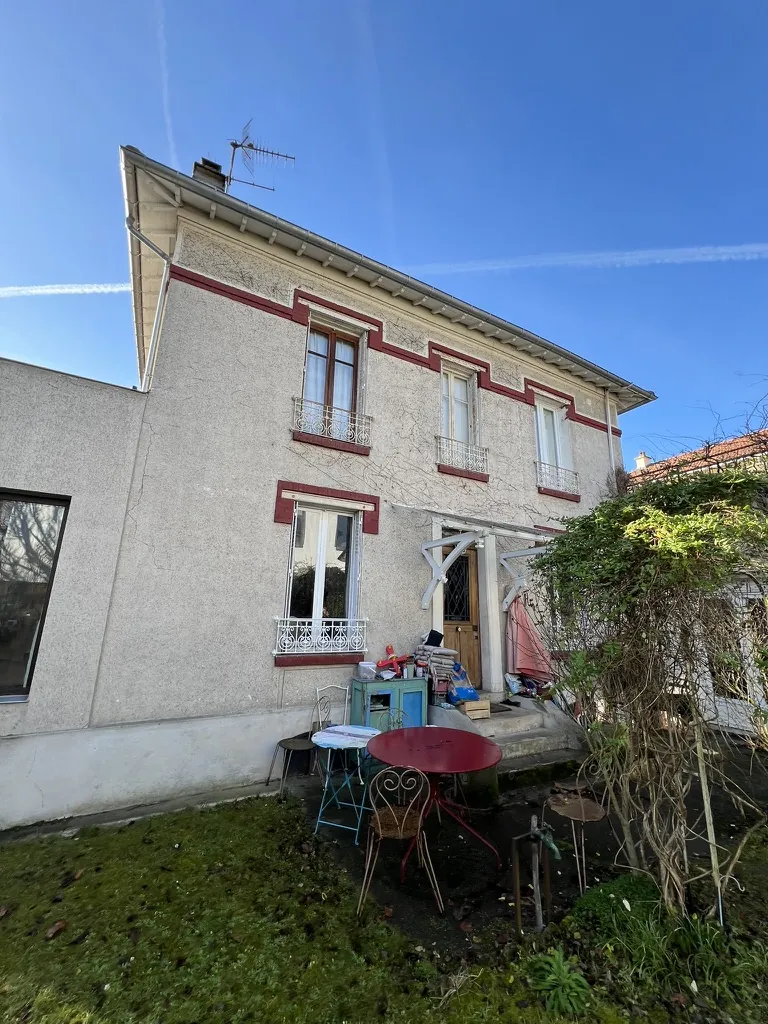
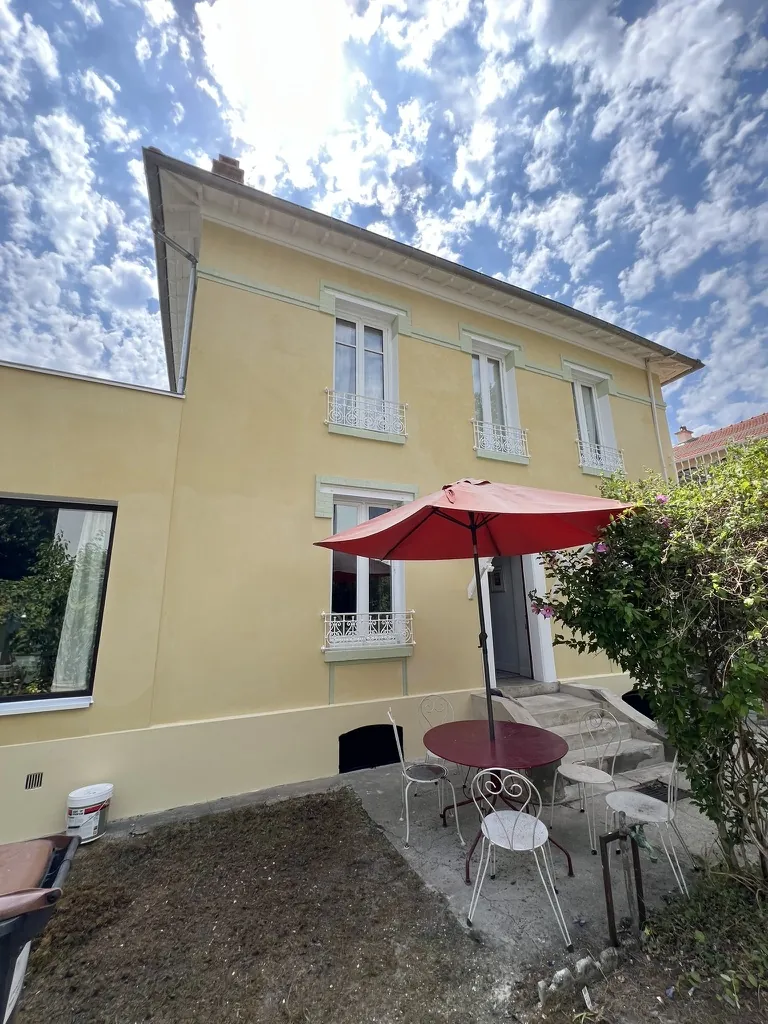
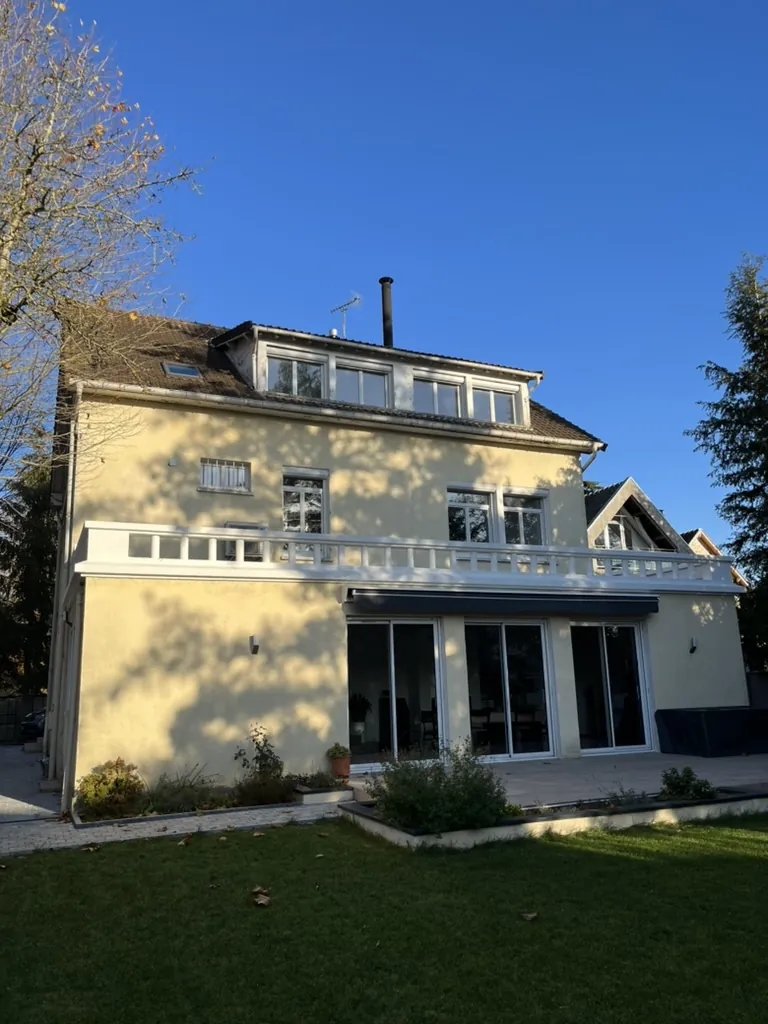
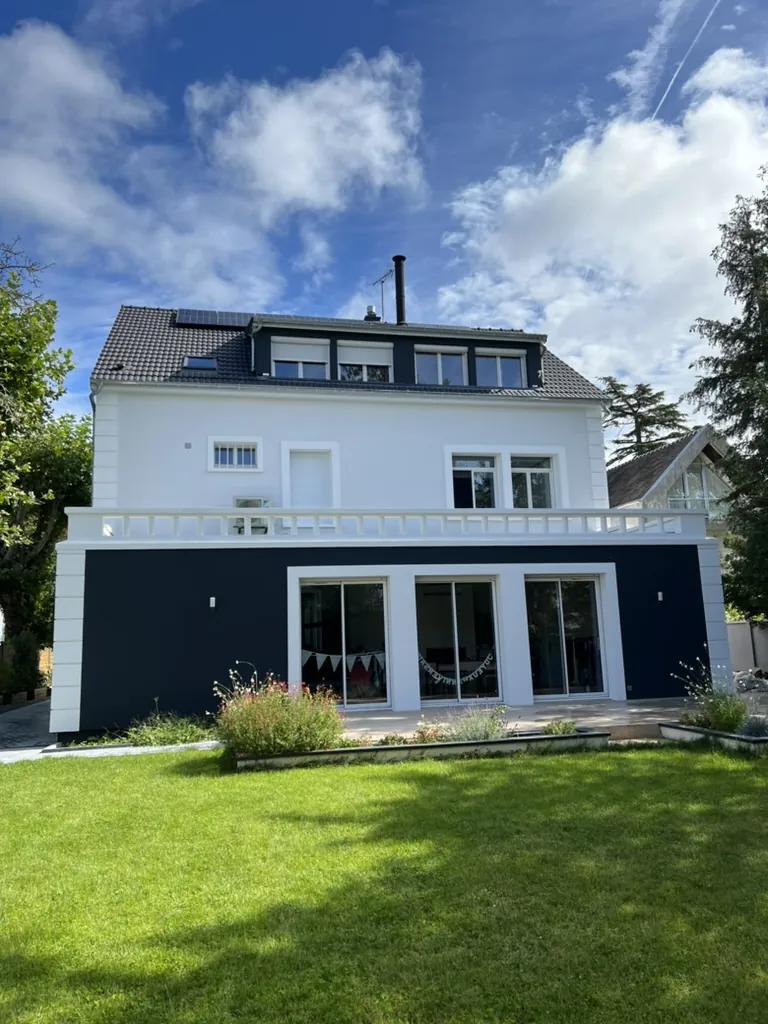
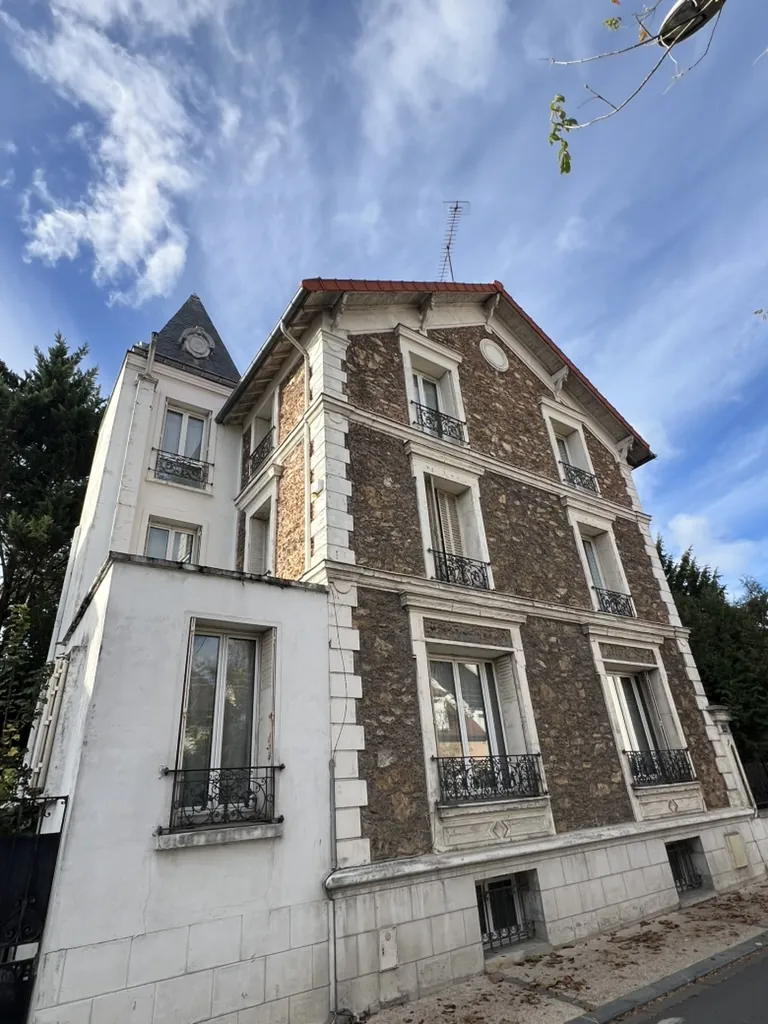
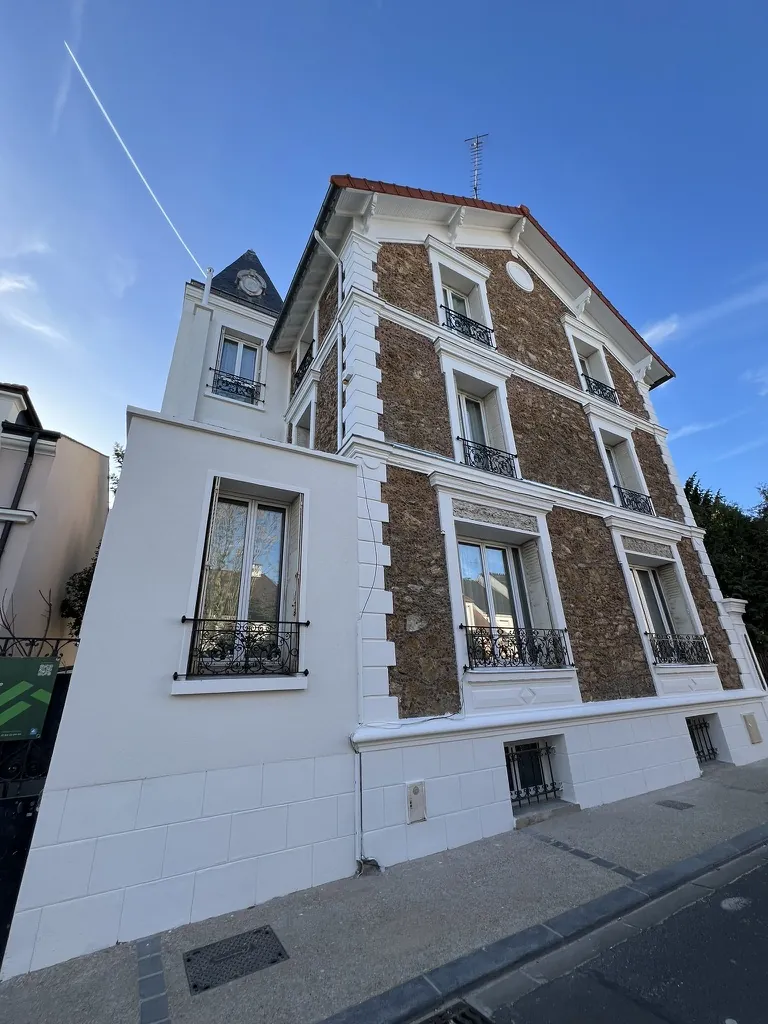
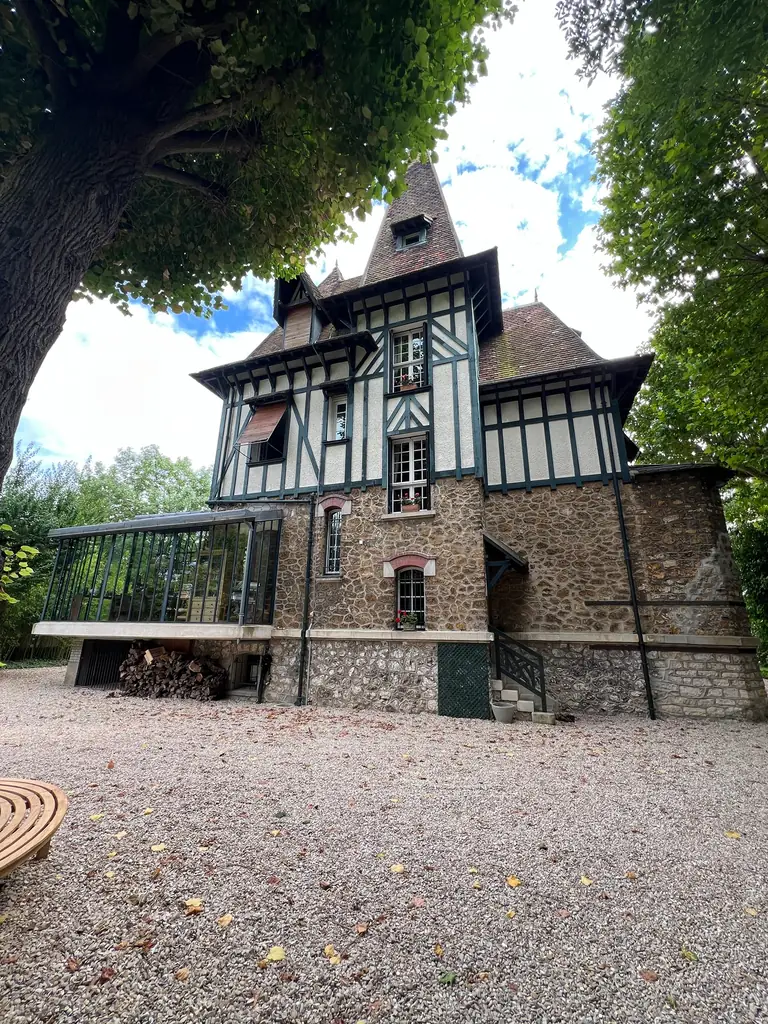
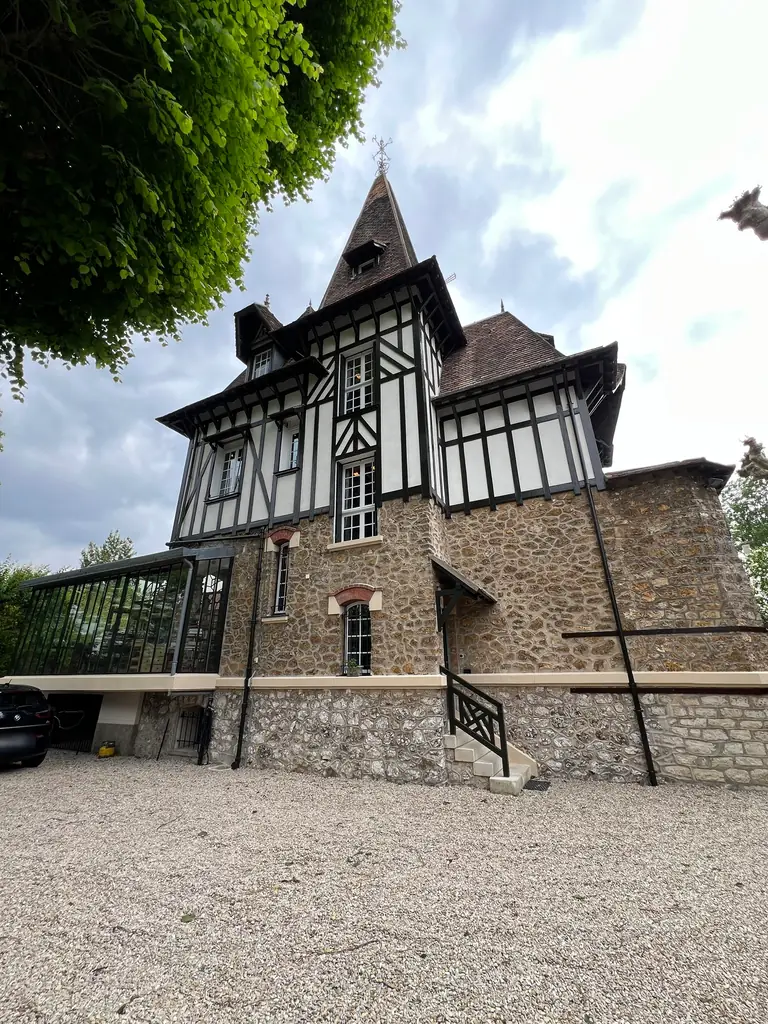
Your house was built with millstone, brick, stone or lime, and the work it needs should respect those materials. I advise owners of period houses east of Paris, in English, from the first visit to the handover of the works.
I am Valérian Sauvage, and I have specialised in old buildings since 2018. My role is that of an owner’s representative: I read the house, describe the right work with a partner company, and follow it on site until the end.
The work I advise on
I advise first on the outside of period houses, from the foot of the walls to the ridge of the roof, then on their windows and interiors; the partner companies carry out the work.
- Millstone facades. Millstone, or meulière, is a very hard, pitted stone that was left exposed on many villas from the late nineteenth century. Its joints and decorative chips call for slow, careful repair.
- Stone and brick. Gentle cleaning, repointing and repairs like for like, so that each material keeps its colour and texture.
- Lime renders. A lime render system in layers: a key coat, a body coat, a through-coloured finish coat and, where it suits, a limewash. Lime lets an old wall breathe.
- Roofs and zinc work. Slate, tile and zinc, gutters and flashings, with FRONTIS and Aertoit. I survey roofs by drone, which gives photos and measurements without anyone climbing up.
- External insulation, where it makes sense. On a plain wall it can be the right choice. It is not if it would hide the decoration of a facade, or overhang the street or a neighbour’s land.
- Windows, joinery and interior painting. Once the facade and roof are done: restoring old windows, adding insulating glazing to existing windows, cabinetmaking and interior painting, with Balthazar Berthemet, my trusted partner for finishing work.
The page on facade restoration explains the materials, the methods and indicative costs.
Where I work
I am based in La Varenne-Saint-Hilaire, in Saint-Maur-des-Fossés. I work mainly in Saint-Maur and La Varenne, Le Perreux, Nogent and Joinville, and also in Fontenay-sous-Bois, Vincennes, Saint-Mandé, Charenton-le-Pont and Saint-Maurice, with Champigny-sur-Marne case by case. Elsewhere in France, I work on a project basis.
Each of these towns has its own houses and its own rules. The areas I cover are described one by one, with a few figures on their older houses.
How I work
- A visit. Before suggesting anything, I come to see the house and I listen to you: what you like about it, what concerns you, how you live in it.
- Reading the building. I look at what the walls are made of, how they were built and what earlier repairs used.
- A detailed quote. With the partner company, I describe the work line by line. The colour is chosen from a colour chart, and its reference is written into the quote.
- Follow-up to handover. I follow the works with the company and keep you informed, until I walk round the finished house with you.
A word on how I am paid: by the companies that carry out the works. My visit and my advice are not invoiced to you. I explain this, and each step of a project, on the page about my role as an owner’s representative.
Why work with an English speaker?
A French quote for facade work is precise, and its vocabulary is specific: enduit (render), badigeon (limewash), dégarnissage des joints (raking out the joints). I explain each line in plain English, and I speak with the craftsmen in French.
The paperwork follows the same logic. Changing the look of a house (its colour, its materials, external insulation) requires a déclaration préalable, a prior declaration filed with the town hall; in Saint-Maur and Le Perreux, any facade renovation does. The town has one month to reply. Near a historic monument it has two, because the Architecte des Bâtiments de France (ABF), the state architect for protected surroundings, must agree to the works.
I explain what is asked, and why.